
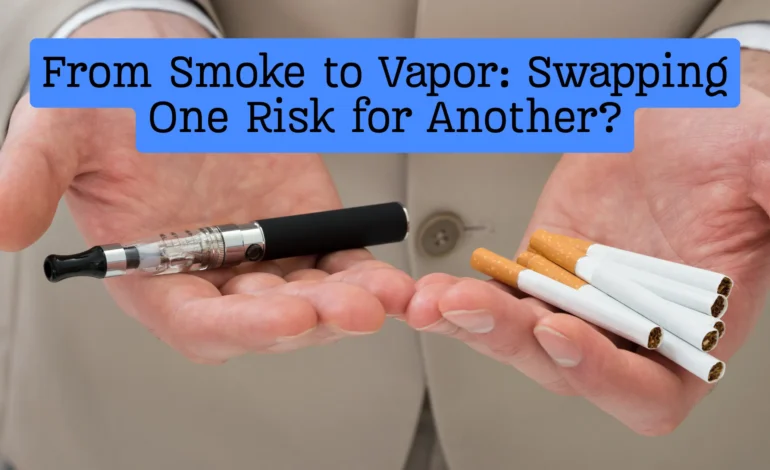
From Smoke to Vapor: Swapping One Risk for Another?

Introduction
As the popularity of traditional cigarette smoking wanes, an increasing number of people are turning to electronic cigarettes (e-cigarettes) as a supposedly safer alternative. Yet, new research and health data reveal that switching to vaping could simply mean trading one set of health risks for another. Many individuals seeking clarity find themselves asking: Are e-cigarettes safe? The consensus emerging among health experts suggests the answer is more complex than marketing messages indicate, as vaping introduces new challenges and uncertainties.
While colorful advertisements and sleek devices contribute to the impression that e-cigarettes are a modern solution to a longstanding problem, the reality is far more layered. Questions remain about their actual health impact and whether their widespread use could lead to unexpected public health concerns. As we explore below, e-cigarettes, though widely promoted as tools for quitting smoking, harbor their dangers and uncertainties. Understanding these risks is crucial for anyone considering this transition or supporting someone else on their journey from smoking to vaping.
Understanding E-Cigarettes
E-cigarettes are battery-powered devices that heat a proprietary liquid, typically composed of nicotine, flavor additives, and various chemicals, to produce an inhalable aerosol. According to Medical News Today, these devices were initially designed to mimic the experience of smoking while delivering nicotine in a supposedly safer form. Since first appearing on the market, their use has skyrocketed, especially among younger demographics lured by flavors ranging from fruit punch to dessert, and by design features that offer concealment and convenience. Many vaping companies market these devices as a healthier alternative to conventional smoking, promising reduced harm and an easier path to quitting tobacco altogether.
Promotions often emphasize their role in smoking cessation, but public health authorities remain divided about their risks and benefits. While many smokers see vaping as a way to wean themselves off regular cigarettes, public health experts point out that the evidence for long-term safety and effectiveness is still in its early stages. The core debate centers on whether this shift genuinely lowers harm or simply introduces different, less-studied dangers into the equation. Moreover, some e-liquids on the market contain higher concentrations of nicotine than traditional cigarettes, raising questions about the potential for greater addiction and health consequences over time.
Health Risks Associated with Vaping
Contrary to the assumption that vaping is risk-free, a growing body of scientific research has raised several concerns regarding its health impact. Many users are unaware that their seemingly harmless habit can introduce serious threats to their well-being:
- Respiratory Issues: Studies have shown that inhaling e-cigarette vapor can trigger bronchiolitis, an inflammation of the lung’s smallest airways. This can cause difficulty breathing, persistent coughing, and in severe or prolonged cases, irreparable lung damage. Unlike cigarette smoke, which has been studied for decades, the long-term respiratory effects of e-cigarette vapor remain incompletely understood, making regular users the subjects of an ongoing health experiment.
- Cardiovascular Effects: Inhaling nicotine through vaping instantly increases blood pressure, accelerates heart rate, and triggers blood vessel narrowing, effects familiar to cigarette smokers. Recent research indicates these acute responses may contribute to a higher risk for stroke and heart disease over time, questioning how much safer vaping really is compared to smoking conventional cigarettes. According to the CDC, the aerosol from e-cigarettes can contain harmful substances that may negatively impact cardiovascular health. Additionally, some studies have demonstrated that the fine particles present in e-cigarette aerosol may also harm the cardiovascular system by promoting clot formation and inflammation.
- Chemical Exposure: The chemical makeup of vape juice is often undisclosed, but commonly includes propylene glycol, glycerin, and a variety of flavorings. When heated, these substances can break down into new, potentially more toxic compounds like formaldehyde or acrolein, which directly harm lung tissue and can irritate the eyes and throat. There is also growing concern about cancer risk, DNA damage, and immune system suppression due to ongoing chemical exposure—threats that remain poorly defined simply because they have not been studied over decades.
It’s essential to recognize that while vaping lacks the tar of cigarettes, the absence of tar does not guarantee harmlessness. Studies have also highlighted the presence of metals such as nickel, lead, and chromium in some e-cigarette aerosols, likely originating from the heating coils, which further raises questions about daily and long-term exposure to such toxins. A simple illustration showing a traditional cigarette on one side and a vape device on the other, with arrows pointing to health hazard icons (like lungs and heart) to represent the health risks of both smoking and vaping.
Dual Use: A Compounding Risk
While some users attempt to transition entirely to vaping, a significant segment—especially young adults and current smokers—engage in dual use, alternating between cigarettes and e-cigarettes. The motivations behind this behavior range from attempting to reduce overall cigarette intake to using e-cigarettes where smoking is prohibited, but the consequences can be severe. Dual use not only fails to reduce harm but may actually magnify it. Research published in the journal found that dual users are four times more likely to develop lung cancer compared with those who smoke only cigarettes. The combined exposure to toxins from both products compounds damage to the cardiovascular and respiratory systems, undermining any perceived safety advantage of vaping alone.
This compounding risk is particularly concerning given the misconception that supplementing cigarette use with e-cigarettes will gradually reduce dependence. In practice, many individuals continue to maintain high nicotine levels or even escalate their usage by using both products in different settings, effectively increasing exposure rather than minimizing it.
Secondhand Exposure Concerns
E-cigarettes do not just threaten users but pose risks to bystanders through secondhand aerosol. Unlike harmless water vapor, vape emissions can contain dangerous levels of heavy metals, such as lead, as well as ultrafine particles, nicotine, volatile organic compounds, and other toxins. The exhaled aerosol lingers in indoor environments, settling on surfaces and entering the airways of non-users. Children are particularly vulnerable, with studies pointing to increased respiratory symptoms for those exposed to e-cigarette aerosol at home or in cars. Babies and young children are particularly at risk due to their faster breathing rates, smaller lungs, and developing immune systems, which increase their sensitivity to toxins in the air.
Alternative Cessation Strategies
Quitting smoking is challenging, but many evidence-based approaches can help manage withdrawal and reduce relapse. If you or someone you know wants to stop using tobacco products, consider these options:
- Nicotine Replacement Therapies (NRTs): Tools such as transdermal patches, oral lozenges, and nicotine gum can deliver small, controlled doses of nicotine to ease cravings with significantly reduced health risks compared to vaping or smoking. NRTs are available over the counter and can be used alone or in combination for even greater effectiveness.
- Behavioral Counseling: Both in-person and virtual counseling have proven effective. Trained professionals not only provide emotional support but also teach coping strategies for triggers and stress that fuel tobacco use. Group support or structured programs offer accountability and encouragement, increasing the chances of lasting success.
- Prescription Medications: Two medications—bupropion (Zyban) and varenicline (Chantix)—are FDA-approved to support smoking cessation. These options may ease cravings and reduce withdrawal symptoms, further increasing the likelihood of quitting successfully. Physicians can help determine which medication, if any, is appropriate based on medical history and quitting goals.
It’s worth noting that a combination of therapies—for example, using both an NRT patch and attending regular counseling—often leads to the best success rates in quitting tobacco for good.
Conclusion
While the rapid spread of e-cigarettes might suggest a safer alternative to conventional smoking, accumulating scientific evidence reveals that these devices create significant and unique health hazards. Vaping may not truly represent a risk-free escape from smoking, and those hoping to ditch cigarettes should explore cessation aids that have been proven over decades of use and rigorous study. Potential users—and those supporting them—should heed expert recommendations and choose cessation options with proven safety records. If you are considering vaping as a way to quit smoking, consult trusted healthcare professionals about safer, more effective alternatives. When it comes to nicotine addiction, trading one risk for another is seldom the healthiest choice.